2B / BW Shalimar Bagh, Opp. BQ Market, Near DLF Mall New Delhi - 110088, India.
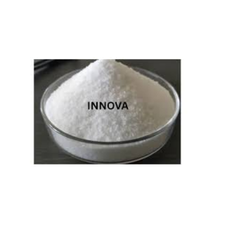
Innova Corporate provides a complete range of Polyacrylamide (PAM) in Srinagar – including anionic, cationic, and non‑ionic grades – for flocculation, thickening, and dewatering applications, all effective at low temperatures. Our high molecular weight PAMs are formulated for cold-water performance, ensuring rapid dissolution and high shear stability even at 2-10°C. Essential for Srinagar's water-intensive sectors: apple & fruit processing (pomace sludge), handicraft dye ETPs, houseboat sewage, and municipal STPs.
From STPs in Srinagar (under Dal Lake conservation) to apple juice plants in Pulwama, from houseboat cluster common STPs to pashmina dyeing ETPs, and from hotel wastewater treatment to municipal sludge dewatering, our PAM products are tailored to your specific solids type and cold-weather conditions. We provide jar testing to select the right ionic type and dosage, plus on‑site polymer make‑up and feed optimization (with cold water dissolution guidelines). Partner with us to reduce sludge volume, improve dewatering performance, and lower your overall treatment cost in Srinagar – especially for facilities discharging into Dal Lake where nutrient-rich sludge must be minimized.
| Parameter | Technical Details |
|---|---|
| Primary Manufacturer | Innova Corporate India |
| Chemical Product Type | Polyacrylamide (PAM) / High Molecular Weight Polymer |
| Commercial Abbreviation | PAM / Polyacrylamide |
| Empirical Chemical Formula | (C₃H₅NO)ₙ |
| Available Ionic Structures | Anionic Polyacrylamide / Cationic Polyacrylamide / Non-Ionic Polyacrylamide |
| Aqueous Solubility Profile | 100% soluble and uniformly dispersible in water matrices upon correct dilution scaling |
| Operational pH Scale | 4.0 – 9.0 (Highly stable configuration across standard plant systems) |
| Primary System Function | Polymer chain bridging, surface charge neutralization, industrial flocculation, and thickening agent |
Innova Corporate (India), headquartered at 2B/BW Shalimar Bagh, New Delhi, offers high-performance Polyacrylamide (PAM) for industries across Srinagar. Our ultra-high molecular weight water-soluble macromolecular flocculant is engineered for particle bridging, rapid sludge dewatering, and suspended solids sedimentation in industrial ETP systems, delivering superior solid-liquid separation performance for anionic, cationic, and non-ionic waste stream applications. We maintain a dedicated supply network to ensure that Agartala’s textile mills, paper plants, mining operations, oilfield facilities, municipal STPs, and agricultural sectors receive consistent, high-purity PAM flocculants for cost-effective clarification and regulatory compliance.
PAM Polyacrylamide must never be dosed as dry powder directly into the effluent stream. It should be pre-dissolved in clean water at a concentration of 0.1% to 0.3% by weight under slow, continuous stirring for a minimum of 60 minutes to allow complete hydration of the polymer chains. Over-dilution or aggressive mixing must be avoided as it causes irreversible mechanical shear degradation of the long molecular chains—significantly reducing bridging efficiency and floc strength. Our team provides on-site preparation guidance for facilities in Srinagar.
Yes, we are a leading supplier of high-performance PAM flocculants (anionic, cationic, and non-ionic) for Srinagar. We ensure prompt delivery and technical support for industrial ETPs, municipal STPs, textile mills, paper factories, mining operations, oilfield facilities, and agricultural soil management throughout the region.
When used as a primary flocculant, PAM relies entirely on its molecular chain bridging mechanism to agglomerate suspended particles—best suited for streams with moderate solids and low colloidal stability. When used as a coagulant aid after PAC dosing, PAC first neutralizes surface charges on colloidal particles, and PAM then bridges these destabilized micro-flocs into large, dense macro-flocs that settle rapidly. This two-stage combination dramatically reduces both PAC and PAM dosage requirements while producing a significantly drier, faster-settling sludge cake—ideal for Agartala’s variable industrial effluents.